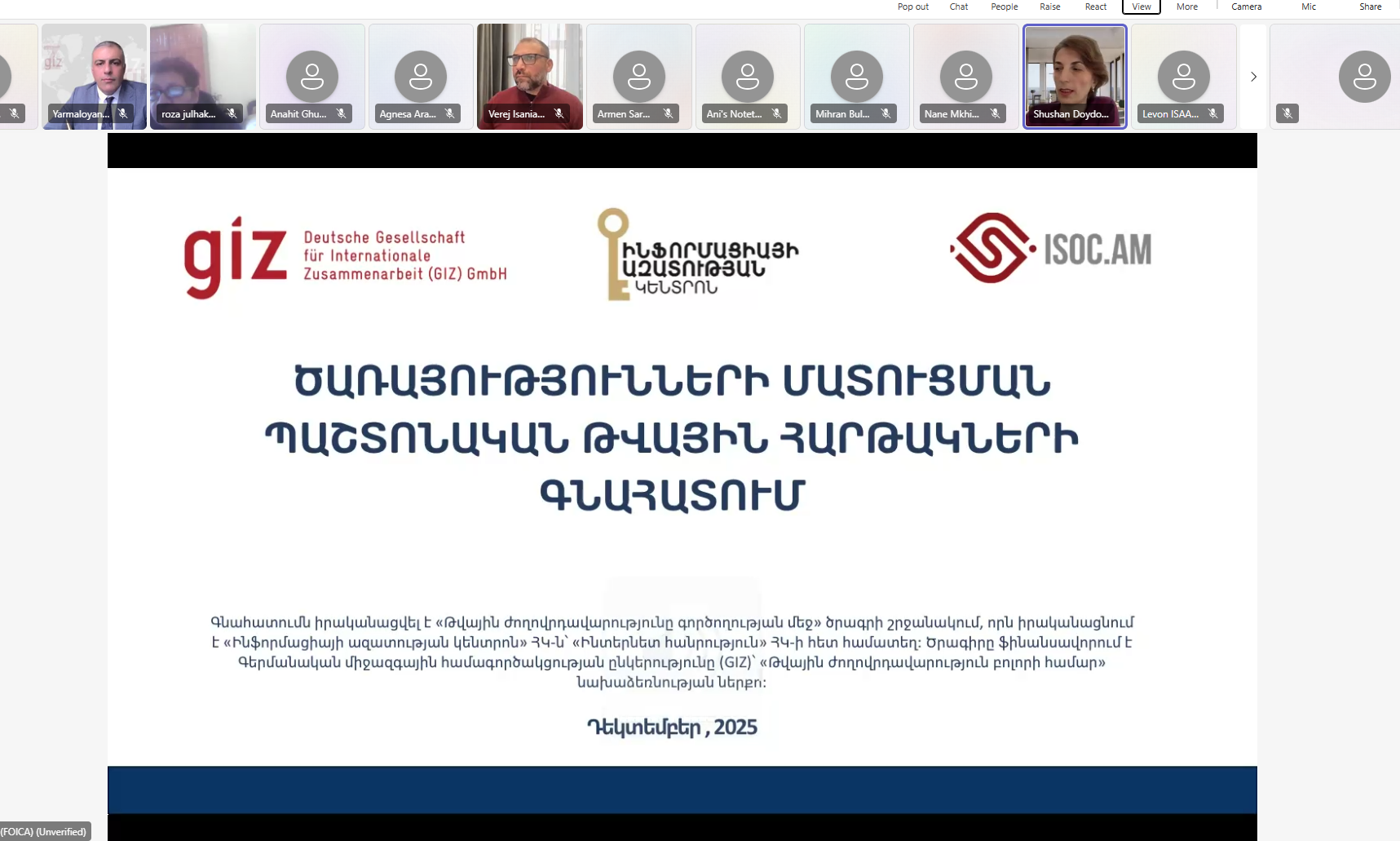
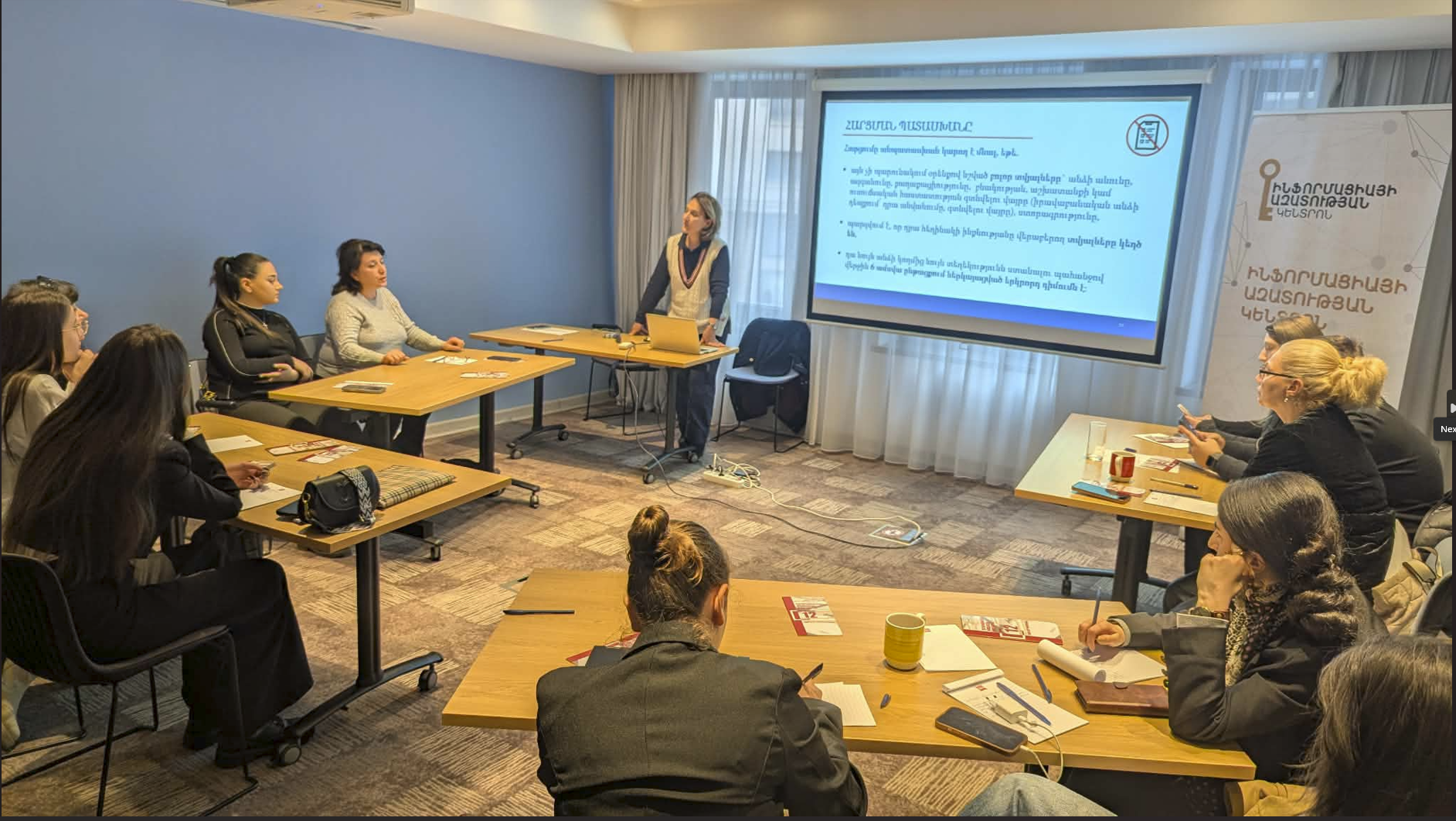

On January 30, a public webinar organized by the Freedom of Information Center of Armenia (FOICA) brought together more than 50 representatives of state bodies, civil society, media, and local self-government to discuss the findings of a comprehensive and independent assessment of Armenia’s key e-participation platforms — e-draft.am, e-request.am, and hartak.am.
The assessment was conducted in December 2025 and examined the platforms’ compliance with user needs, digital design standards, and the principles of transparent governance. Particular attention was paid to the platforms’ effectiveness as digital public services and their role in state–citizen interaction and public value creation.
The study aimed to assess the technical performance and content quality of the platforms, as well as to identify challenges that may limit their effective and participatory use by citizens. The assessment also approached the platforms as key tools of e-participation and digital democracy, evaluating their capacity to support meaningful public engagement in governance processes.
During the webinar, Shushan Doydoyan, President of FOICA and Head of the Assessment Team, presented the key findings of the assessment and a set of practical recommendations to improve the functionality, accessibility, and usability of the platforms.
The assessment was carried out within the framework of the “Digital Democracy in Action” project, implemented by the Freedom of Information Center NGO in partnership with the Internet Society NGO. The project is supported by GIZ Armenia as part of the “Digital Democracy for All” initiative.
In his remarks, Hrach Yarmaloyan, Project Manager of “Digital Democracy in Action,” emphasized the crucial role of civil society in enhancing the practical applicability and usability of digital public platforms. “At this stage of digital transformation, many countries have introduced digital platforms for public service delivery. However, a key issue remains the extent to which these platforms are practically accessible and usable for citizens. Civil society plays a bridging role by monitoring platform performance, identifying usability challenges, and contributing to continuous improvement through public feedback,” noted Yarmaloyan.
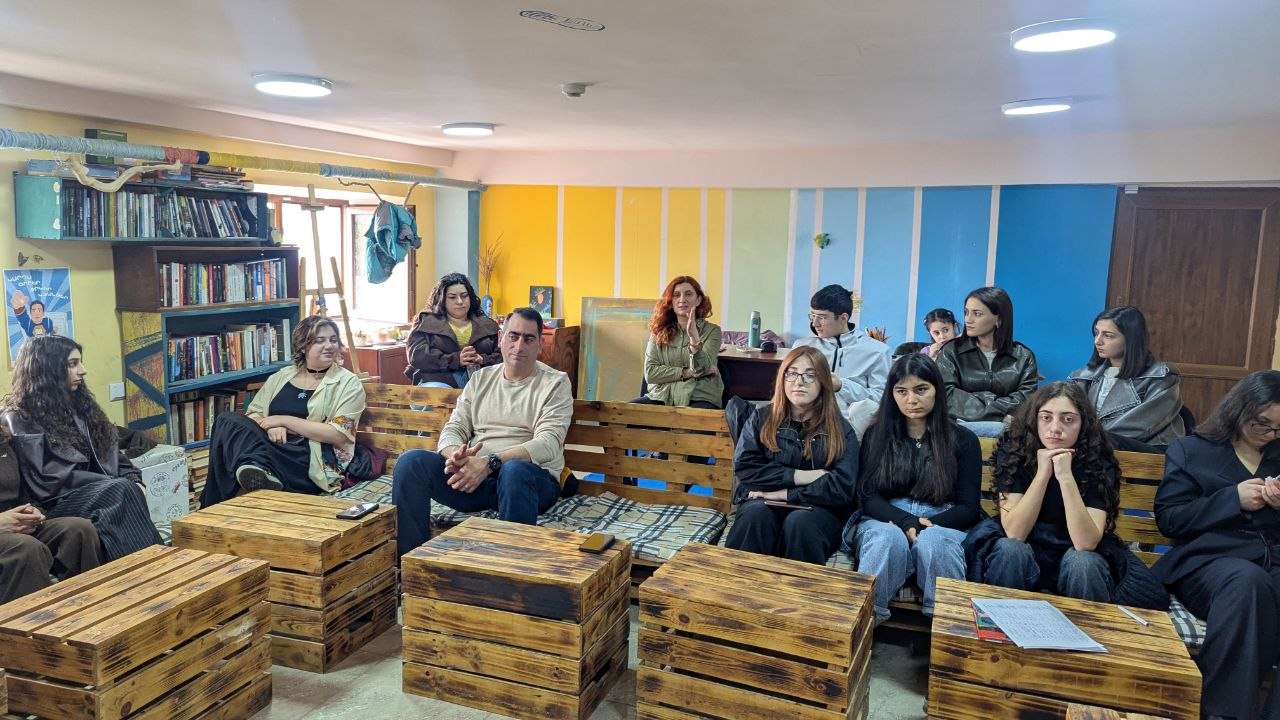
Representatives of the state bodies responsible for administering the platforms also participated in the discussion. Journalists and civil society representatives shared their user experience, raised concerns, and highlighted practical challenges encountered while using the platforms. The discussion enabled an open and two-way professional exchange, with responses provided by both the assessment team and platform administrators.
The webinar also served as a platform for presenting planned reforms and upcoming improvements by the teams coordinating the platforms.
“Transparency, proportional processing of personal data, structured feedback loops, reliable technical support, security, user-experience evaluation mechanisms, and complete, high-quality statistical data constitute the baseline system requirements for any official digital public platform. Even the most advanced platform loses its practical value if users are unaware of it or unable to use it effectively,” emphasized FOICA President Shushan Doydoyan.
The observations and feedback voiced during the webinar will be incorporated into the final assessment report, which will be published in the near future.
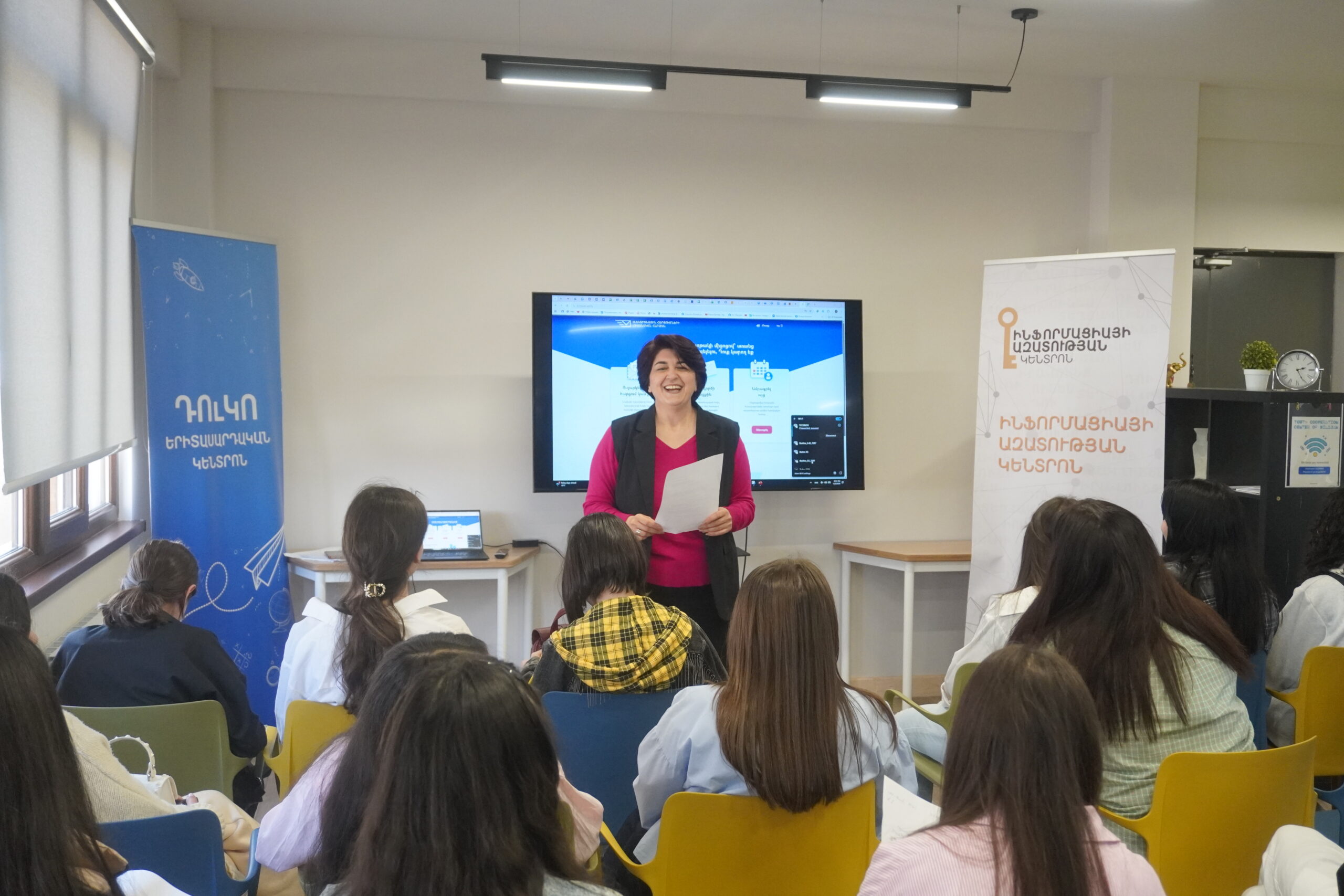
As part of the “Digital Democracy for All” initiative, FOICA has also developed a User Guide for the Unified Website for Publication of Legal Acts’ Drafts, providing a clear, step-by-step explanation of the e-draft platform’s functionalities and practical use, to strengthen public participation in the drafting of legal acts.